
Why the Internet Has Always Loved Alternate Identities
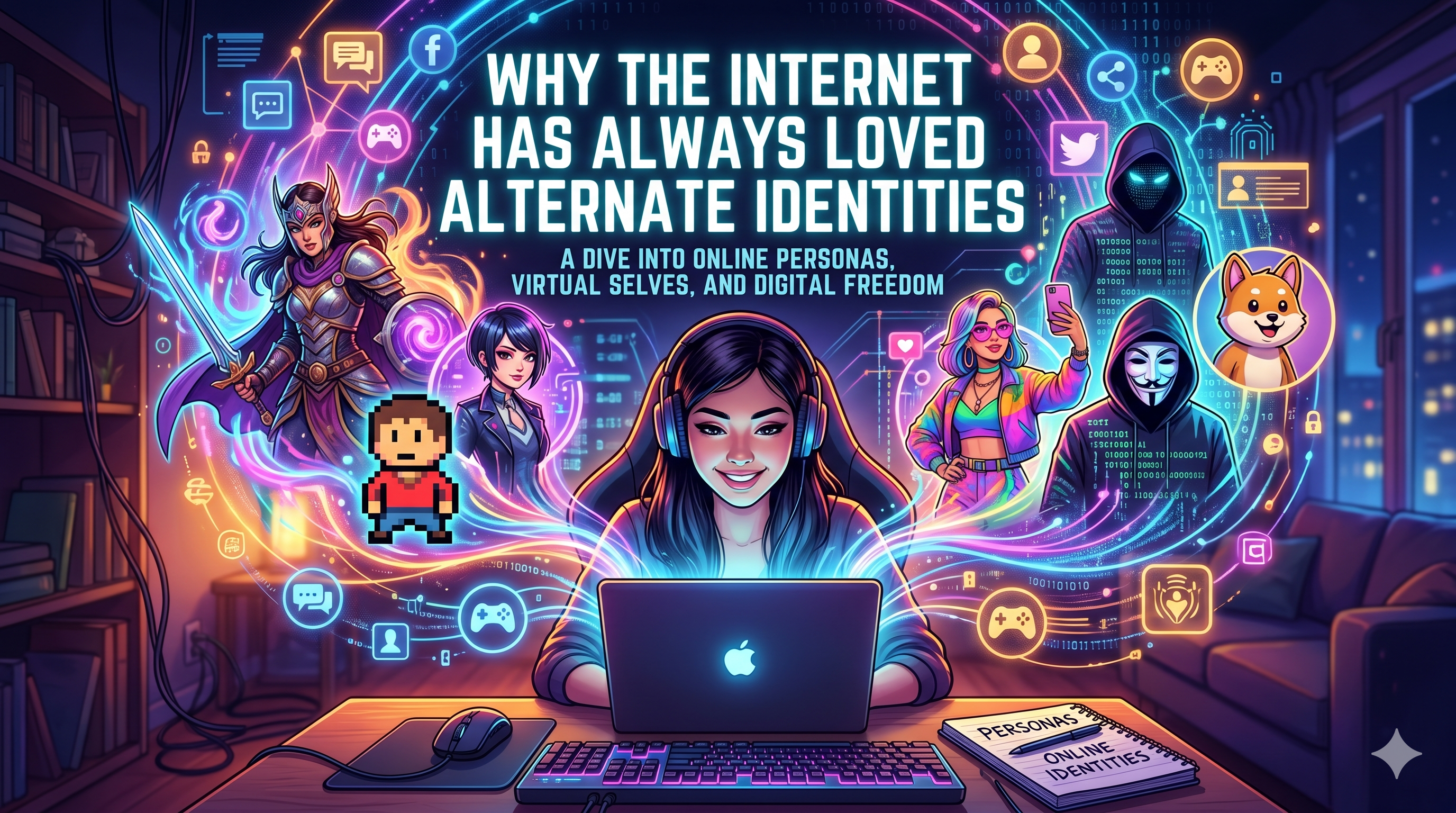
Spend enough time online and you start noticing something strange.
People rarely present themselves exactly as they are.
One person uses a cartoon character as a profile picture for ten years. Someone else adopts a nickname that eventually becomes more recognizable than their real name. Entire communities form around avatars, fictional personas, and characters that exist only in digital spaces.
For outsiders, this can seem unusual.
For internet users, it's completely normal.
The web has always been a place where people experiment with identity. Long before social media became part of everyday life, users were already creating usernames, designing signatures for forums, and building online personalities that looked very different from their offline selves.
The technology changed.
That habit never really went away.
Nobody Asked For Real Names Back Then
In the early days of the internet, anonymity wasn't considered suspicious.
It was expected.
People joined forums using nicknames. Gamers created aliases. Chat rooms were full of users known only by screen names.
Very few people cared what someone was called outside the platform.
What mattered was reputation.
If someone consistently posted interesting content, helped newcomers, or contributed to discussions, people remembered them. Their online identity became valuable regardless of who they were in the real world.
Looking back, it's interesting how natural that felt.
Nobody questioned it.
Avatars Became Part of the Conversation
Profile pictures started as small decorative details.
Then they became something much bigger.
A good avatar could instantly communicate interests, personality, or a sense of humor. People recognized each other by images long before they memorized usernames.
Even today, many online communities work the same way.
You see a familiar avatar and immediately know who posted, even if you can't remember their name.
That visual shorthand became part of internet culture.
And over time, people grew attached to the characters and images representing them online.
Fictional Characters Aren't Just Fictional
One thing that surprises people who aren't involved in fandoms or creative communities is how personal fictional characters can become.
A character might start as a drawing, an illustration, or a piece of artwork.
Months later, people are creating stories around them, commissioning new designs, discussing their personalities, and incorporating them into community projects.
The character develops a life beyond its original purpose.
This isn't unique to any particular community.
You'll find the same pattern in gaming groups, animation fandoms, art circles, and countless niche spaces scattered across the internet.
People enjoy building connections to ideas that feel creative and personal.
The Internet Rewards Imagination
A lot of online platforms are built around information.
Search engines help people find answers.
News sites deliver updates.
Shopping platforms sell products.
But some of the internet's most active communities revolve around imagination rather than information.
People gather because they enjoy creating things.
Artwork.
Stories.
Characters.
Worlds.
The appeal isn't practical.
It's creative.
And creativity tends to attract participation in a way passive content often doesn't.
Why Niche Communities Keep Growing
A funny thing happens when people discover a niche interest.
Instead of keeping it to themselves, they usually start looking for others who share it.
That's how many internet communities begin.
Not through marketing campaigns.
Not through massive launches.
Just a handful of people realizing they enjoy the same thing.
Then they create a forum.
Or a Discord server.
Or a social media group.
A few years later the community has thousands of members.
The process looks simple from the outside, but it has repeated itself countless times across internet history.
Personal Expression Has Never Been Easier
Years ago, expressing yourself online required effort.
You needed basic design skills to customize a profile page.
You learned how forums worked.
Maybe you spent hours tweaking graphics for a signature banner.
Today, the tools are easier.
But the motivation remains exactly the same.
People want to create spaces that feel like their own.
Whether it's a social profile, a gaming account, or an avatar, users naturally look for ways to make digital environments feel more personal.
That instinct shows up everywhere online.
Communities Built Around Characters Tend To Last
Some online trends disappear within weeks.
A meme goes viral.
A platform becomes popular.
Then everyone moves on.
Character-driven communities often behave differently.
Characters can evolve.
New artists reinterpret them.
Writers expand their stories.
Fans create alternate versions.
The community always has something new to discuss because the creative process never fully stops.
That's one reason these spaces often remain active long after other trends fade away.
New Tools Usually End Up In Creative Communities First
Creative communities have always been early adopters.
Give artists, writers, and hobbyists a new tool and they'll immediately start experimenting with it.
Sometimes the results are impressive.
Sometimes they're weird.
Most of the time they're both.
That's why conversations around platforms such as https://clothoff.net/ai-furry often appear alongside discu ssions about digital art, character creation, and online creativity. The specific technology may be new, but the behavior behind it feels familiar to anyone who has spent time in creative communities.
People discover a tool.
They experiment.
Then they share what they've made.
The cycle repeats.
The Need To Create Isn't Going Anywhere
Technology changes constantly online.
Platforms rise and fall.
Communities migrate from one website to another.
Formats evolve.
Yet some habits seem surprisingly durable.
People still enjoy creating things.
They still enjoy sharing them.
And they still enjoy finding others who appreciate the same ideas.
That's been true since the earliest message boards and it remains true today.
Closing Thoughts
The internet is often described as a place for information, but that's only part of the story.
It's also a place where people build identities, create characters, and experiment with ideas they might never explore elsewhere.
Maybe that's why avatar-driven and character-focused communities continue attracting attention decade after decade.
The tools evolve.
The platforms change.
But the desire to create something uniquely your own remains one of the most consistent parts of online culture.